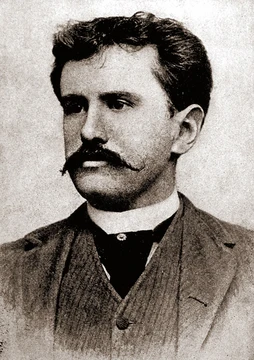
Zheng Zhenduo
Journalist, writer, archaeologist, and first director of the Palace Museum.

Zheng Zhenduo (December 19, 1898 – October 17, 1958) was a Chinese journalist, writer, archaeologist and scholar. He was also the first director of the Palace Museum at the Forbidden City. He made a significant contribution towards the establishment of the Chinese literature and the editing of a variety of literary magazines. In 1921, he, Mao Dun, Jiang Baili, Geng Jizhi, and others organized the Literary Study Society. In 1923, he became the chief editor of Fiction Monthly. After the establishment of the People's Republic of China, he was assigned to be head of the Cultural Relic Bureau, Director of the Institute of Archaeology of the Chinese Academy of Sciences and literary research institute, the assistant minister of cultural department, committee member of State Council scientific program committee and Chinese Academy of Science philosophical social sciences, the vice-chairman of Chinese folk literature and art research council, etc.
- born
- December 19, 1898, in Yongjia, Zhejiang Province
- died
- October 17, 1958, in a plane crash in Kanash, Chuvashia, Soviet Union
- field
- Journalism, literature, archaeology, cultural preservation
- nationality
- Chinese
- known_for
- First director of the Palace Museum; co-founder of the Literary Study Society; c
Verified Timeline
Lore & Background
Zheng Zhenduo was born on 19 December 1898 in Yongjia, Zhejiang Province, with ancestral home in Changle, Fujian province. He was born in a poor family. Together with two younger sisters, he was raised by his mother because his father and grandfather died when he was still a teenager. He was named 'Zhenduo' by his grandfather—'Zhen' denotes arousing an action and 'Duo' is a kind of big bell—hoping he would ring like a great bell to summon and arouse people. He studied at the Beijing Railway Management School from 1917, graduating in March 1921. During the May Fourth Movement, he was a student representative, spreading news of student movements in Beijing. In 1919, he helped publish two magazines called 'New Society' and 'National Salvation Speeches Weekly.' In January 1921, he and twelve others including Mao Dun and Ye Shengtao founded the Literary Research Association, which advocated realism and opposed art for art's sake. In May 1921, he helped set up the Demotic Opera Troupe with Mao Dun, Ye Shengtao, Chen Dabei, Ouyang Yuqian, Xiong Foxi and other writers. In 1922, he established the first magazine for children, Children's World. In January 1923, he became chief editor of Fiction Monthly. After the May 30 Incident in 1925, he helped found a newspaper called Gongli Ribao. From 1931 he taught at Yenching University, Tsinghua University, and from 1935 to 1941 at Jinan University as Dean of the Faculty of Arts. After 1949, he became Vice-Minister of Culture and Head of the Cultural Relics Bureau. On 17 October 1958, Zheng led national cultural delegates to visit Arabia and Afghanistan. He died in the Tupolev Tu-104 crash in Kanash, Chuvashia, Soviet Union.
Reader's Guide
Zheng Zhenduo's significance lies in his multifaceted role as a journalist, writer, archaeologist, and cultural steward during a transformative period in modern China. As a co-founder of the Literary Study Society and chief editor of Fiction Monthly, he helped shape the direction of Chinese literature toward realism and social engagement. His work in cultural preservation, especially during the Japanese invasion, safeguarded countless ancient texts and artifacts, including those of the Palace Museum. After 1949, his leadership in the Cultural Relic Bureau and other institutions ensured the protection and public accessibility of China's heritage. His legacy endures through his editorial contributions, scholarly writings, and efforts to preserve historical relics for future generations.
Did You Know?
- Zheng Zhenduo's grandfather named him 'Zhenduo' meaning 'arousing bell,' hoping he would ring like a great bell to summon and arouse people.
- He was the first director of the Palace Museum at the Forbidden City.
- In 1922, Zheng established the first magazine for children in China, called Children's World.
- During the Japanese invasion, he disguised himself as a staff member in a stationery store under the name Chan Sixun to rescue ancient books.
- He died in the Tupolev Tu-104 crash in Kanash, Chuvashia, Soviet Union on October 17, 1958, while leading a cultural delegation to Arabia and Afghanistan.
The Boy Named for a Bell
Zheng Zhenduo was born on December 19, 1898, in Yongjia, Zhejiang Province, with ancestral roots in Changle, Fujian. His childhood was shaped by loss and poverty: his father and grandfather died while he was still a teenager, and his mother raised him and two younger sisters on meager means. His grandfather, before passing, gave him the name 'Zhenduo' — 'zhen' meaning to stir or arouse, and 'duo' a large ceremonial bell. The elder wished his grandson to ring out like that great bell, summoning and awakening others. He also received the childhood nickname 'Mu Guan,' a lighthearted nod to a wooden official. In 1917, Zheng enrolled at the Beijing Railway Management School, graduating in March 1921. Outside the classroom he read voraciously across social sciences, Chinese and Western literature, forging a keen critical mind. During the May Fourth Movement he acted as a student representative, relaying news of Beijing's protests. In 1919 he helped publish the magazines 'New Society' and 'National Salvation Speeches Weekly,' his earliest steps into public intellectual life.
Architect of a Literary Movement
In January 1921, Zheng Zhenduo joined forces with Mao Dun, Ye Shengtao, Jiang Baili, Geng Jizhi, and others to found the Literary Study Society, the earliest literary association of the New Literature Movement. The group championed realism and explicitly rejected the doctrine of art for art's sake. That same spring, in May 1921, he co-founded the Demotic Opera Troupe with the same circle of writers, and on May 31 they launched the monthly magazine Drama. The following year he established Children's World, recognized as the first magazine dedicated to young readers in China. In January 1923, Zheng assumed the chief editorship of Fiction Monthly from Mao Dun, a role he held on and off for nearly nine years. His editorial philosophy centered on what he called 'Blood and Tears' — literature that confronted the suffering of ordinary people through unflinching realism. He also contributed to the editing of Min Chao, Xin Shehui, and Wenxue Xunkan, and later served as chief editor of The World's Library. In June 1925, responding to the May Thirtieth Incident, he co-founded the newspaper Gongli Ribao in Shanghai with Wu Yuzhi and Ye Shengtao. Over the years he authored works including History of Chinese Literature and his 1943 Diary.
Professor, Bureaucrat, and Guardian of Heritage
From the late 1930s onward, Zheng Zhenduo split his energies between the university lecture hall and the corridors of government. In late 1931 he took professorships at both Yenching University and Tsinghua University. Between 1935 and 1941 he served as president of the Faculty of Arts and director of the Chinese department at Jinan University. After 1949 he joined Peking University's faculty, and his government portfolio expanded dramatically. He was appointed head of the Cultural Relic Bureau, a role that made him the first director of the Palace Museum at the Forbidden City. He simultaneously held positions as director of the Institute of Archaeology under the Chinese Academy of Sciences, assistant minister of the cultural department, committee member of the State Council's scientific program committee, a member of the Chinese Academy of Sciences' philosophical and social sciences division, and vice-chairman of the Chinese folk literature and art research council. These overlapping appointments reflected the new government's desire to place a scholar of his breadth at the helm of cultural preservation, ensuring that the nation's archaeological and literary heritage received both academic rigor and institutional protection.
The Flight That Ended a Life
On October 17, 1958, Zheng Zhenduo boarded a Tupolev Tu-104 at the head of a delegation of national cultural figures bound for Arabia and Afghanistan. The trip was meant to be a diplomatic and cultural exchange, a fitting capstone to a career that had spanned journalism, literary criticism, archaeology, and public service. The aircraft never reached its destination. The plane crashed in Kanash, in the Chuvashia region of the Soviet Union, killing everyone on board. Zheng was fifty-nine years old. His death closed a life that had begun in a poor household in Yongjia, Zhejiang, where a grandfather had named him for a great bell meant to rouse a nation. In the decades between that naming and that final flight, he had helped forge modern Chinese literary institutions, edited landmark magazines, taught generations of students at Yenching, Tsinghua, Jinan, and Peking Universities, and stood as the first guardian of the Forbidden City's vast collections. The bell, in the end, fell silent.
Frequently Asked Questions
Who is Zheng Zhenduo?
Zheng Zhenduo (1898–1958) was a Chinese journalist, writer, archaeologist, and scholar born in Yongjia, Zhejiang Province. He is best known for his pioneering work in modern Chinese literature and for serving as the inaugural director of the Palace Museum at the Forbidden City.
What was Zheng Zhenduo's role at the Palace Museum?
He was appointed the very first director of the Palace Museum, the institution housed within the Forbidden City, where he oversaw its early management and the safeguarding of its vast historical collections.
What was the Literary Study Society and how was Zheng Zhenduo involved?
In 1921, he co-founded the Literary Study Society together with writers such as Mao Dun, Jiang Baili, and Geng Jizhi to promote and develop Chinese literary culture. He further shaped the literary scene by becoming chief editor of Fiction Monthly in 1923.
How did Zheng Zhenduo die?
He lost his life in a plane crash on October 17, 1958, near Kanash in the Chuvash region of the Soviet Union.
Why is Zheng Zhenduo considered important to Chinese literary history?
He helped build the infrastructure of modern Chinese letters through his editorial leadership, magazine work, and the founding of the Literary Study Society. After 1949, he also directed cultural-relic preservation efforts, linking literary scholarship with the protection of China's archaeological heritage.
More in Literature And Writers 1-24
Spotted an error? Know more?
This is a living reference — every entry is fact-audited, and reader corrections feed straight into our audit queue. Suggest an edit · See this site's audit record