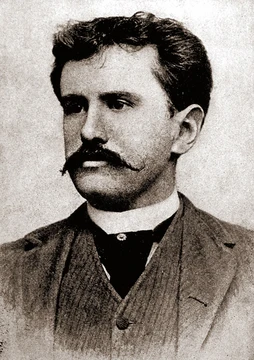
Walter Kennedy (poet)
Scottish makar, defendant in the Flyting, poet of The Passioun.

Walter Kennedy (ca. He is best known as the defendant against William Dunbar in *The Flyting of Dumbar and Kennedie*, but his surviving works show him to have been an accomplished master in many genres. Kennedy was born into the Scottish Clan Kennedy, a principal aristocratic family in Dunure, South Ayrshire, part of the Galloway Gàidhealtachd, a strong Gaelic-speaking area of the Scottish Lowlands, and was almost certain to have been a native speaker of the language.
- field
- Poetry
- nationality
- Scottish
- known_for
- The Flyting of Dumbar and Kennedie; The Passioun of Crist
Lore & Background
His older brother was John Kennedy, 2nd Lord Kennedy of Dunure. As great-grandson of Robert III (through his mother's side) and nephew of James Kennedy, bishop of St Andrews, Kennedy would have been very well-connected in the royal court. He possessed estates in both Carrick and Galloway and held ecclesiastical posts such as rector of Glenluce and canon of Glasgow Cathedral, although records show that his right to hold at least one of his posts was contested by the Holy See in Rome. His longest poem is *The Passioun of Crist*, a vivid depiction of Christ's suffering and crucifixion. The other four works are much shorter: 'An aigit man, twys fourty yeiris', 'At Matyne hour, in myddis of the nycht', 'Ane Ballat of Our Lady', and 'Leif luve, my luve, na langar it lyk'. Although his surviving works are written in Middle Scots, he may also have composed in Gaelic; in the Flyting, Dunbar strongly associates him with the bardic tradition. He was an acclaimed poet in his lifetime, with Sir David Lyndsay paying tribute to him as a fellow makar.
Reader's Guide
Walter Kennedy's significance lies in his role as a Scottish makar at the court of James IV and his participation in the flyting genre, particularly the celebrated *Flyting of Dumbar and Kennedie*. His surviving works, though few, demonstrate versatility across genres, from religious narrative in *The Passioun of Crist* to lyric and ballad forms. The fact that he was almost certainly a native Gaelic speaker from a Gaelic-speaking region of the Lowlands adds a linguistic and cultural dimension to his legacy, as his poetry in Middle Scots may represent a bridge between Gaelic bardic tradition and Lowland Scots courtly verse. The twentieth-century poet William Neill, interested in Kennedy's South Ayrshire roots and possible role as a Gaelic speaker, incorporated tributes to him into his own writing, including a Gaelic poem. Kennedy's work remains neglected but is increasingly recognized for its quality and historical importance.
Did You Know?
- Kennedy was almost certain to have been a native speaker of Gaelic, as he was born in the Galloway Gàidhealtachd.
- His right to hold at least one of his ecclesiastical posts was contested by the Holy See in Rome.
- He appears in Dunbar's Lament for the Makaris described as being close to death, though there is no evidence he died at that date.
Noble Blood and Gaelic Roots
The Clan Kennedy held sway over Dunure in South Ayrshire, a region forming part of the Galloway Gàidhealtachd—a pocket of robust Gaelic speech within the broader Lowland landscape. It is near certain that Kennedy grew up speaking Gaelic as his mother tongue, a fact that would later become a point of both pride and ridicule in his literary career. His family ties reached the highest echelons of Scottish power: he was great-grandson of King Robert III and nephew of James Kennedy, bishop of St Andrews. These connections placed him firmly within the orbit of the royal court. His older brother, John, became the 2nd Lord Kennedy of Dunure. He held estates across Carrick and Galloway and occupied ecclesiastical posts including rector of Douglas and canon of Glasgow Cathedral, though the Holy See in Rome at one point challenged his right to at least one of these appointments.
The Flyting and the Bardic Accusation
Kennedy is perhaps most widely remembered today for his role as the defendant in The Flyting of Dumbar and Kennedie, a fierce poetic exchange with his contemporary William Dunbar. The flyting genre thrived on personal invective, and Dunbar seized upon Kennedy's Carrick origins with particular relish. Most pointedly, he associated Kennedy with "Erschry"—a term that in the Scottish context of the era signified Gaelic culture and the older bardic tradition. Dunbar mocked Kennedy's taste as perverse and his verse-making as mere blabbering from Carrick lips, wagering that a pair of Lothian poets would produce far more polished Lowland Scots verse. The insult carried a deeper cultural charge: it positioned Kennedy's Gaelic heritage as a mark of provincialism against the refined courtly language of the central Lowlands. Kennedy's response, preserved as part of the six surviving works, demonstrates his command of the form. The episode reveals a poet whose linguistic and cultural identity was complex—rooted in Gaelic Galloway yet fully at home in the Middle Scots court of James IV.
A Master of Many Genres
His longest and most impressive composition, The Passioun of Crist, traces the life of Christ from the nativity through to the ascension in a courtly, accomplished register. It stands as a significant work that has been largely overlooked by later readers, and it differs sharply in form, tone, and subject matter from the Flyting, his second-longest surviving piece. The remaining four works are considerably shorter but span diverse genres: a meditation on an aged man at forty, a devotional ballat to Our Lady, a lyric of love addressed as "Leif luve," and a nocturnal piece set at matins. All are composed in Middle Scots, though the possibility that Kennedy also wrote in Gaelic cannot be ruled out. In his own lifetime, his reputation was secure: both Gavin Douglas and Sir David Lyndsay, later towering figures in Scottish letters, paid him tribute as a fellow makar. It is probable that a far larger body of his poetry has been lost to time, leaving modern readers with only a fraction of his true output.
Echoes in Later Poetry
What is certain is that his memory endured long beyond the medieval court. In the twentieth century, the poet William Neill, drawn to Kennedy's South Ayrshire origins and his possible role as a Gaelic-speaking voice within the Scottish court, wove tributes to the makar into his own verse. His Gaelic poem Chuma Bhaltair Cinneide (In Memory of Walter Kennedy) conjures a vivid image: Walter walking beneath the shadow of the Black Vault at sunset, gravel crunching beneath his feet on the grey beach of Dunure. This modern elegy bridges five centuries, restoring to Kennedy a physical landscape and a linguistic world that the medieval record only hints at. Through Neill and others, Kennedy occupies a place in Scottish literary memory that extends well past the six surviving poems, anchoring him to the land and the Gaelic tradition he carried into the Lowland court.
Frequently Asked Questions
What is The Flyting of Dumbar and Kennedie?
It is a medieval Scots poetic exchange in which Dunbar and Kennedy trade barbed insults, with Kennedy cast in the role of the respondent or defendant. The piece is one of the most celebrated examples of the flyting tradition in European letters.
What works by Walter Kennedy have survived to this day?
His known output includes the narrative devotional poem The Passioun of Crist and his half of The Flyting of Dumbar and Kennedie, though surviving evidence suggests he worked across several genres. Because so few texts remain, each one is treated as a key witness to late-fifteenth-century Scots poetry.
What was Walter Kennedy's family and linguistic background?
He was born into the Clan Kennedy, a principal aristocratic family seated at Dunure in South Ayrshire within the Galloway Gàidhealtachd, a strongly Gaelic-speaking part of the Lowlands. This upbringing makes it near-certain that Gaelic was his native language before he entered the Scots-speaking court culture of James IV.
Why does Walter Kennedy matter in the history of Scottish literature?
As a court poet under James IV, he exemplifies the flourishing of Scots vernacular verse in the late fifteenth century. His range—from devotional narrative to comic flyting—shows the breadth a single makar could command in the Scottish renaissance.
More in Literature And Writers 1-24
Spotted an error? Know more?
This is a living reference — every entry is fact-audited, and reader corrections feed straight into our audit queue. Suggest an edit · See this site's audit record