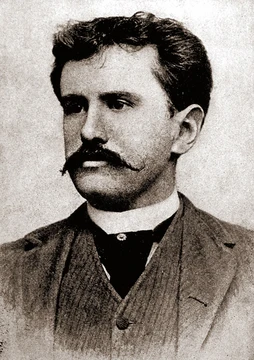
William A. Smalley
Linguist who co-created the Hmong Romanized Popular Alphabet.

William Allen Smalley (April 4, 1923 – December 16, 1997) was an American linguist best known for his role in developing the Romanized Popular Alphabet for the Hmong language. Born in Jerusalem to American missionaries, he spent much of his career in Southeast Asia as a translation consultant and later as a professor of linguistics at Bethel University.
- born
- April 4, 1923, Jerusalem, British Mandate of Palestine
- died
- December 16, 1997, New Haven, Connecticut, USA
- field
- Linguistics, anthropology
- nationality
- American
- known_for
- Co-developer of the Romanized Popular Alphabet for the Hmong language
Verified Timeline
Lore & Background
Smalley was born in Jerusalem to American missionaries serving with the Christian and Missionary Alliance. There he met Reverend G. Linwood Barney and Father Yves Bertrais, and together they developed the Romanized Popular Alphabet for the previously unwritten Hmong language. Paul, Minnesota, where he discovered many Hmong refugees settling. He studied Hmong adaptation and the Pahawh Hmong script, co-authoring two books on it in 1990. He retired in 1987 but continued writing, and died of a heart attack in 1997.
Reader's Guide
William A. Smalley's most enduring contribution is the Romanized Popular Alphabet (RPA), the writing system he helped create for the Hmong language in Laos in the early 1950s. Before the RPA, Hmong had no widely accepted written form. The system became the most used Hmong script globally, enabling literacy, cultural preservation, and communication among Hmong communities worldwide. Yang Dao, assistant director of the English Language Learner Project of St. Paul Public Schools, stated that the writing system was invaluable for preserving Hmong culture, tradition, and history. Through his roles as editor of Practical Anthropology and associate editor of The Bible Translator and Language Sciences, he influenced missionary linguistics and language planning. His legacy is particularly strong among Hmong communities, who credit him with providing a tool that helped sustain their identity across continents.
Did You Know?
- Smalley was born in Jerusalem to American missionaries serving with the Christian and Missionary Alliance.
- He co-developed the Romanized Popular Alphabet for the Hmong language with Reverend G. Linwood Barney and Father Yves Bertrais in Laos.
- After 23 years as a translation consultant, Smalley briefly worked at a discount toy store before becoming a professor at Bethel University.
- He co-authored two books on the Pahawh Hmong script in 1990.
- Yang Dao stated that Smalley's writing system was invaluable for preserving Hmong culture, tradition, and history.
The Tragic Birth of an Institution
William Marsh Rice accumulated his fortune through real estate, railroad development, and cotton trading in Texas. In 1891, the aging Massachusetts-born businessman made a sweeping decision: he would charter a free-tuition educational institute in Houston, bearing his name, to be realized after his death. His will demanded the school be a competitive institution of the highest grade, though it also restricted enrollment to white students only. Rice's death on September 23, 1900, was initially assumed to be natural—his valet Charles F. Jones simply found him in his bed. But a suspicious check, signed by Rice yet misspelling the recipient's name, set off a bank teller's alarm. The recipient was Albert T. Patrick, Rice's New York lawyer, who claimed the fortune had been redirected away from the planned institute. A New York district attorney's probe uncovered a forged will. Jones had been persuaded to administer chloroform to the sleeping Rice. Patrick was convicted of murder in 1901, though conflicting medical evidence led to his pardon in 1912. Jones, who cooperated with prosecutors, escaped prosecution.
Lovett and the Architectural Vision
With the estate now valued at $4.6 million—roughly $125 million in 2024 dollars—Captain James A. Baker, Rice's Houston lawyer, steered the board of trustees toward building the school. In 1907, they chose Edgar Odell Lovett, then heading Princeton's Department of Mathematics and Astronomy, as the institute's future president, on the recommendation of Princeton's own president, Woodrow Wilson. Lovett accepted in 1908 and devoted the following year to an extensive tour, visiting 78 institutions of higher learning around the world. Two experiences left lasting marks: the architectural uniformity and aesthetic beauty at the University of Pennsylvania, which shaped the campus design, and the residential college system at Cambridge, eventually adopted decades later. His founding philosophy was unambiguous: a university devoted as much to research as to teaching, with small enrollment and high standards, demanding that the most distinguished professors teach undergraduates directly. He was inaugurated as first president on October 12, 1912.
The 59 Immortals and the Honor Code
The cornerstone for the first building—now Lovett Hall—was laid in 1911. On September 23, 1912, the twelfth anniversary of Rice's murder, the William Marsh Rice Institute opened with just 59 students, later nicknamed the "59 immortals," and roughly a dozen faculty members. Eighteen more joined shortly after, bringing the inaugural class to 77 students, 48 men and 29 women. The institute admitted both genders from its very first day, though co-ed on-campus housing would not arrive until 1957. True to Rice's will, no student paid tuition. The academic rigor, however, was punishing: after the first term, approximately half the students had failed. The first commencement came on June 12, 1916, conferring 35 bachelor's degrees and one master's. That same year, students voted to adopt the Honor System, a pledge-based academic integrity code that persists to this day. The university's first Ph.D., in mathematics, was awarded in 1918.
Legacy, Distinction, and Reckoning
Today, Rice University spans 300 acres in Houston and houses eight schools covering architecture, business, engineering, humanities, music, natural sciences, and social sciences. It holds R1 classification for very high research activity and has been a member of the Association of American Universities since 1985. Its alumni include 26 Marshall Scholars, 13 Rhodes Scholars, 7 Churchill Scholars, and 3 Nobel laureates. The university competes in 14 NCAA Division I sports as the Rice Owls in the American Conference. Yet the institution's history carries darker chapters. In the 1920s, a significant number of students were active KKK supporters; a 1922 yearbook shows roughly twenty students in Klan robes. A 1923 Klan event was held on property owned by the institute near the home of a Black woman who had sued the school in 1909. In 2020, students petitioned to remove the 1930 Founder's Memorial Statue of Rice, who had been a slave owner. In January 2022, the board announced plans to relocate the statue within the academic quadrangle.
Frequently Asked Questions
Who is William A. Smalley?
William Allen Smalley (1923–1997) was an American linguist and anthropologist whose career centered on Southeast Asian languages. He is best remembered for co-creating a practical writing system for the Hmong language.
What is the Romanized Popular Alphabet and what role did Smalley play in it?
The RPA is a Latin-based writing system designed for the Hmong language, and Smalley was a co-developer of it. His work gave Hmong speakers a standardized, accessible way to read and write their language.
Where was William A. Smalley born and what was his early background?
He was born on April 4, 1923, in Jerusalem, then under the British Mandate of Palestine, to American missionary parents. That multicultural upbringing preceded his long professional focus on Southeast Asian linguistics.
What did William A. Smalley do for a living?
He spent much of his career as a translation consultant working in Southeast Asia before transitioning into academia. He ultimately held a professorship in linguistics at Bethel University.
Why is William A. Smalley considered significant in the field of linguistics?
By co-developing the RPA, he helped the Hmong community gain a functional written language, which carried major cultural and educational consequences. He died on December 16, 1997, in New Haven, Connecticut.
More in Literature And Writers 1-24
Spotted an error? Know more?
This is a living reference — every entry is fact-audited, and reader corrections feed straight into our audit queue. Suggest an edit · See this site's audit record