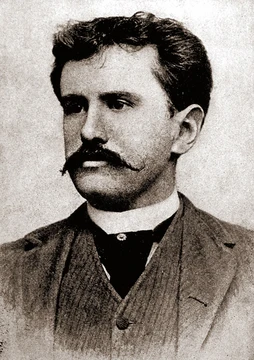
The Hind and the Panther
An allegorical poem on religious controversy by John Dryden.

- author
- John Dryden
- form
- Allegorical poem in heroic couplets
- subject
- Religious controversy and church authority
- notable_for
- Major poetic result of Dryden's conversion to Catholicism
Lore & Background
The poem presents the Roman Catholic church as a milk-white Hind, the Church of England as a panther, and various Nonconformist groups as other animals. The first part describes these denominations; the second deals with church authority and transubstantiation; the third argues for a united front of Crown, Anglicans, and Catholics against Nonconformists and Whigs. This call directly contradicted James II's policy of appealing to Nonconformists as allies against the Church of England, providing some evidence that Dryden converted from genuine conviction rather than political time-serving.
Reader's Guide
The Hind and the Panther provoked a flurry of hostile pamphlets, the best-known being The Hind and the Panther Transvers'd to the Story of the Country Mouse and the City Mouse by Matthew Prior and Charles Montagu, which ridiculed the incongruity of animals debating theology. Over time, as passions faded, the poem began to be judged on its own merits. Alexander Pope referred to it as the most 'correct' example of Dryden's versification. Dr. Johnson praised its smooth metre, wide knowledge, and abundant imagery, though he agreed with Prior and Montagu that the scheme was 'injudicious and incommodious.' Walter Scott found the beast-fable no more absurd than any other fine example, and William Hazlitt believed it had 'more genius, vehemence and strength of description than any other of Dryden's works.' Lord Macaulay admired its style despite Whiggish distaste for its message. George Saintsbury called it 'the greatest poem ever written in the teeth of its subject.'
Did You Know?
- The critic Margaret Doody called it 'the great, the undeniable, sui generis poem of the Restoration era.'
- The poem was answered by a flurry of hostile pamphlets, the best-known being by Matthew Prior and Charles Montagu.
- Alexander Pope used to refer to The Hind and the Panther as the most 'correct' example of Dryden's versification.
- The poem's call for an alliance of Anglicans, Catholics, and King directly contradicted James II's policy.
Allegorical Architecture and Scale
Its sheer scale is matched by an intricate allegorical architecture that maps the religious landscape of late-seventeenth-century England onto a menagerie of creatures. In the opening section, Dryden assigns each denomination an animal: the Roman Catholic Church becomes a milk-white, immortal Hind; the Church of England a panther; the Independents a bear; Presbyterians a wolf; Quakers a hare; Socinians a fox; Freethinkers an ape; and Anabaptists a boar. The second part shifts to the thornier questions of ecclesiastical authority and the doctrine of transubstantiation, while the third part pivots toward political argument, urging a united front of Crown, Anglicans, and Catholics against the Nonconformist churches and the Whig party. The critic Margaret Doody has singled out the work as utterly unique within the Restoration canon, insisting that it belongs to no pre-existing genre and that no one has ever managed to replicate it.
Conversion, Conviction, and Political Contradiction
The Hind and the Panther is widely regarded as the principal poetic fruit of that conversion, yet it also contains a subtle but telling argument for the sincerity of Dryden's new faith. In the poem's third section, he calls for a political and religious alliance uniting the Crown, the Anglican Church, and the Catholic Church against the Nonconformist denominations and the Whig faction. This position ran directly counter to James II's own strategy, which had been to court the Nonconformists as a counterweight to the Church of England. A poet merely serving the king's interests would have echoed the crown's preferred coalition. Instead, Dryden's insistence on a different alignment suggests that his theological commitments genuinely shaped his political reasoning, making the poem a document of conviction rather than mere courtly opportunism.
A Storm of Satirical Fire
A flood of hostile pamphlets poured out, the most celebrated being a joint effort by Matthew Prior and Charles Montagu, which recast the allegory as a fable about a country mouse and a city mouse. Their central joke was the absurdity of animals sitting down to debate the deepest mysteries of theology, and they pressed the point with a mocking question: is it not just as plausible to picture two mice bilking coachmen and dining with the Devil as to imagine a Hind hosting a Panther at a hermit's cell to discuss the greatest religious mysteries? The satirist Tom Brown attacked Dryden's credibility from another angle, asking pointedly how a man who had long bitten and spat his venom against a particular mode of worship could now be trusted to defend it. Even Dr. Johnson, while praising the poem's metrical smoothness, its breadth of learning, and its rich imagery, conceded that the conceit of one beast advising another to place faith in a pope and council was fundamentally injudicious and incommodious.
Enduring Reputation and Critical Reassessment
As the raw political passions of James II's reign gradually cooled, readers began to approach The Hind and the Panther on its literary merits rather than as a partisan pamphlet. Alexander Pope reportedly cited it as the most correct specimen of Dryden's versification, and Walter Scott praised its meter for never growing rugged, rising with dignity, dipping into playful familiarity for sarcasm, and threading through complex theological argument without turning obscure or prosaic. Scott also noted that the arguments carry an air of conviction and candour that would have forced even a Protestant reader to stay alert, confirming the author's genuine sincerity in his new creed. William Hazlitt went further, declaring the poem superior to all Dryden's other works in genius, vehemence, and descriptive power. Lord Macaulay, despite his Whig sympathies clashing with the poem's message, conceded that no other Dryden work matched its pathos, magnificence, linguistic ductility, and musical variety. George Saintsbury distilled the ambivalence into a single memorable phrase, calling it the greatest poem ever written in the teeth of its subject.
Frequently Asked Questions
What do the Hind and the Panther symbolize in the allegory?
The Hind represents the Roman Catholic Church, while the Panther embodies the Church of England. Their ongoing confrontation in the poem serves as Dryden's vehicle for arguing Catholic primacy and challenging Anglican claims to spiritual authority.
More in Literature And Writers 1-24
Spotted an error? Know more?
This is a living reference — every entry is fact-audited, and reader corrections feed straight into our audit queue. Suggest an edit · See this site's audit record