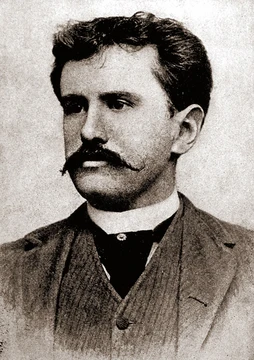
The Autobiography of Alice B. Toklas
Gertrude Stein's memoir written as her partner Alice B. Toklas.

The Autobiography of Alice B. It employs the form of an autobiography authored by Alice B. Toklas, Stein's life partner.
- author
- Gertrude Stein
- genre
- Autobiography (written as by Alice B. Toklas)
- subject
- Gertrude Stein and Alice B. Toklas
Lore & Background
The book is narrated by Alice B. It recounts the household at 27 rue de Fleurus, the role of housemaid Hélène, and preparations for an art exhibition. The narrative covers Picasso and his mistress Fernande Olivier, their breakup, and visits to Fernande in Montparnasse. It details Gertrude and her brother Leo Stein buying paintings by Cézanne and Matisse from Ambroise Vollard, and subsequent friendships with those artists. The book also covers summers in Fiesole, Italy, and Spain, Gertrude's falling out with Apollinaire, and an argument between Picasso and Matisse.
Reader's Guide
The Autobiography of Alice B. Toklas was written by Gertrude Stein in six weeks with the aim of making money, though she disliked writing for that reason and Alice did not expect it to succeed. It was Stein's first work published in the Atlantic Monthly, which printed sixty percent of the book in four installments. Reactions among friends were mixed: Carl Van Vechten liked it; Henry McBride thought it too commercial; Ernest Hemingway called it a 'damned pitiful book'; Henri Matisse was offended by descriptions of his wife; Georges Braque felt Stein misconstrued Cubism; and her brother Leo Stein deemed it a 'farrago of lies.' The commercial success allowed Stein a more prosperous lifestyle. Virgil Thomson asserted the book reflects Alice's mind, language, and narrative powers, calling it 'in every way except actual authorship Alice Toklas's book.' Critics such as Jeanette Winterson noted that Stein created a new literary form, building upon Virginia Woolf's fictional biography Orlando to reinterpret the autobiographical genre.
Did You Know?
- The book was written in six weeks with the aim of making money.
- It was the first of Stein's writings to be published in the Atlantic Monthly.
- Ernest Hemingway called it a 'damned pitiful book.'
- Leo Stein, Gertrude's brother, deemed it a 'farrago of lies.'
The Parisian Partnership and Salon Life
The very next day she encountered Gertrude Stein, and what began as a chance meeting blossomed into a partnership that would define both women for nearly four decades. Together they transformed 27 rue de Fleurus into one of the most celebrated gathering spots in the expatriate world. Their salon drew luminaries across disciplines: writers such as Ernest Hemingway, F. Scott Fitzgerald, Thornton Wilder, Sherwood Anderson, and Paul Bowles mingled with painters including Picasso, Matisse, and Braque. Behind the scenes, Toklas wore an extraordinary number of hats—confidante, lover, cook, secretary, muse, editor, critic, and all-around organizer—while remaining deliberately in the background. During World War I, the two women learned to drive from Parisian taxi drivers and served as ambulance operators.
Life in the Shadow and the Book That Changed Everything
Despite being the engine behind one of the twentieth century's most influential literary circles, Toklas spent most of her adult life in a kind of deliberate invisibility. W. G. James Merrill, meeting her later, was struck not by the tiny stature, sandals, mustache, and eyes he had heard described, but by the enchantment of her speaking voice, which he likened to a viola at dusk. Toklas. The book became Stein's best-selling work, thrusting her longtime partner into the public eye.
Poverty, the Cookbook, and a Recipe That Outlived Her
Stein's will left Toklas much of the couple's estate, including an art collection with works by Picasso in their apartment at 5 rue Christine. Yet because their partnership had no legal recognition, Stein's relatives moved swiftly to claim the paintings, greatly appreciated in value. They removed the works from Toklas's residence and locked them in a bank vault while she was on vacation. Stripped of that inheritance, she turned to friends and her own writing to survive. Toklas Cookbook, mixing reminiscences with recipes. Its most celebrated entry, contributed by friend Brion Gysin, was 'Haschich Fudge'—fruit, nuts, spices, and cannabis. The recipe appeared in the British edition but was omitted from the first American printing by Harper & Brothers; it returned in the second U.S. edition and became a touchstone of 1960s counterculture.
A Name That Kept Resonating
Toklas's cultural footprint expanded well beyond the literary world. Toklas, starring Peter Sellers, wove her cannabis brownies into its plot. In Santa Cruz, California, Marianne's Ice Cream created a cannabis-free flavor called 'Alice B. Toklas' Fudge Brownie' in homage to the film. The cookbook was translated into numerous languages. Toklas LGBTQ Democratic Club was founded in San Francisco, giving her name a political and community dimension. In the 1980s, mountain bike racer Jacquie Phelan competed under the pseudonym 'Alice B. Toklas Place, since she was born one block away on O'Farrell Street.
Frequently Asked Questions
What is The Autobiography of Alice B. Toklas about?
The book traces the shared life of Gertrude Stein and Alice B. Toklas, centering on their years in Paris and the artistic circle they inhabited. It is told in the first person as Toklas recounting her own experiences, though Stein is the true author behind the text.
What makes the narrative structure of The Autobiography of Alice B. Toklas unusual?
Stein deliberately wrote her own life story from the perspective of her partner, inserting a layer of fictional disguise into what is essentially a memoir. This device gives the text a playful, slightly unreliable voice while still documenting their real shared history.
More in Literature And Writers 1-24
Spotted an error? Know more?
This is a living reference — every entry is fact-audited, and reader corrections feed straight into our audit queue. Suggest an edit · See this site's audit record