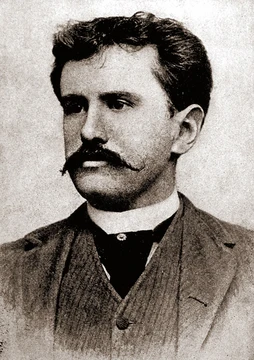
William Neill (poet)
Scottish poet writing in four languages, key to the Scottish Renaissance.

He was a major contributing voice to the Scottish Renaissance.
- field
- Poetry
- nationality
- Scottish
- known_for
- Writing in Scottish Gaelic, Irish, Scots, and English; major voice in the Scottish Renaissance
Lore & Background
William Neill was born in Prestwick, Ayrshire and educated at Ayr Academy. After service in the RAF, he studied at the University of Edinburgh and graduated with an Honours degree in Celtic studies. He was a frequent contributor to Catalyst and Gairm magazines and subsequently became the second editor of Catalyst. As a young writer, he studied the poets of the Scottish Renaissance, and viewed modern assertions that 'Scots was dying in the time of Burns' as the assertions of dyed-in-the-wool townies. Neill lived in Crossmichael in Kirkcudbrightshire, Galloway and taught English at Castle Douglas High School; his wife taught at the primary school. Occasionally he would sicken of teaching English and conduct lessons in Scots instead.
Reader's Guide
William Neill's significance lies in his multilingual poetic output—Scottish Gaelic, Irish, Scots, and English—which made him a major contributing voice to the Scottish Renaissance. His career as a teacher who occasionally conducted lessons in Scots further demonstrated his commitment to linguistic diversity. Neill's poetry continues to be studied for its contribution to Scottish literature and language preservation.
Did You Know?
- William Neill wrote in Scottish Gaelic, Irish, Scots, and English.
- He was the second editor of Catalyst magazine.
- He occasionally conducted English lessons in Scots when he sickened of teaching English.
A Place in the Scottish Poetic Canon
William Neill is identified in the broader literary record as a Scottish poet, a designation that places him within one of the most densely populated national traditions in the English-speaking and Celtic worlds. His name appears in a comprehensive catalog of Scottish poets, a listing that gathers figures spanning an extraordinary range of eras, dialects, and literary modes. To be included in such a roster is to be acknowledged as part of a continuous thread of verse-making that stretches from the earliest recorded Scottish-language poets through to contemporary voices. Neill's presence among these names signals recognition within a tradition that values both high literary achievement and the rich, varied local expression of a nation's poetic impulse. He stands alongside figures ranging from medieval bards to modern experimentalists, united by the simple but powerful fact of their connection to the Scottish literary landscape.
The Multilingual Tapestry of Scottish Verse
The tradition into which William Neill is cataloged is notably multilingual. The comprehensive listing of Scottish poets encompasses writers working in English, Scottish Gaelic, Lowland Scots, Latin, French, Old Welsh, and other languages. This linguistic breadth reflects the complex cultural history of the region, where Celtic, Germanic, and Romance influences have layered one upon another over many centuries. A poet like Neill, situated within this catalog, belongs to a tradition that has never been confined to a single tongue. Whether the verse was composed in the cadences of Gaelic, the earthy directness of Lowland Scots, or the formal structures of Latin, the underlying identity remained Scottish. This multilingual heritage means that the canon resists easy categorization and instead presents a mosaic of voices, each shaped by its own linguistic and cultural context while contributing to a shared national literary identity.
A Tradition Reaching Before the Modern Nation
One of the most striking features of the poetic catalog in which William Neill is listed is its historical depth. The roster explicitly includes poets who lived in the territory that is now Scotland before it had achieved its modern political form. This means the tradition stretches back into the early medieval period, encompassing figures who composed in Old Welsh, early Gaelic, and Latin within kingdoms and lordships that predate the unified Scottish state. Neill's inclusion in such a listing connects him to a lineage that is not merely national but pre-national, rooted in the literary cultures of Pictish, Gaelic, and Norse-influenced communities. The poets listed alongside him range from ancient bards whose names survive in fragmentary records to modern writers, creating a continuum that spans well over a millennium of continuous creative expression in the region.
Among the Dense Roster of Names
In the alphabetical arrangement of the Scottish poets' catalog, William Neill appears in the N-through-R section, positioned between Charles Neaves and William Nicholson. This placement is modest yet significant: it situates him within a remarkably dense cluster of literary figures, many of whom are household names in British and world literature. The surrounding entries include poets of vastly different periods, styles, and languages, from the sixteenth-century to the present day. The sheer volume of names in the listing underscores that Scottish poetry has never been the province of a single dominant voice or a narrow elite. Neill's presence in this crowded, diverse roster reflects a tradition that has consistently produced new writers across every generation, ensuring that the canon remains a living, expanding body of work rather than a fixed monument to a handful of celebrated figures.
Frequently Asked Questions
What languages did William Neill write poetry in?
Neill composed his work in Scottish Gaelic, Irish, Scots, and English, giving his body of poetry a rare multilingual breadth. This range set him apart from many of his contemporaries who typically worked in a single language.
What was William Neill's role in the Scottish Renaissance?
He is regarded as a major contributing voice to the Scottish Renaissance, the cultural movement that sought to revitalize Scottish literary identity after centuries of English-language dominance. His multilingual output helped broaden the movement's reach beyond a single linguistic tradition.
Why is William Neill important to Scottish literature?
His ability to write fluently in both Gaelic and English, as well as Scots and Irish, demonstrated that Scotland's literary heritage could thrive across multiple language traditions at once. This made him a key figure in broadening the scope of the Scottish Renaissance beyond a single-language framework.
More in Literature And Writers 1-24
Spotted an error? Know more?
This is a living reference — every entry is fact-audited, and reader corrections feed straight into our audit queue. Suggest an edit · See this site's audit record