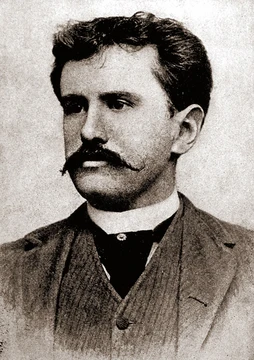
Theodore Ward
Leftist playwright and early contributor to the Black Chicago Renaissance.

James Theodore Ward (September 15, 1902 – May 8, 1983) was a leftist political playwright and theatre educator during the first half of the 20th century and one of the earliest contributors to the Black Chicago Renaissance. Often referred to as the 'dean of black dramatists,' Ward was well known for tackling controversial topics related to African-American urban life during the Great Depression. His staged works were lauded for their innovative depiction of the black experience, most notably for doing away with the spiritual ballads and feverish dancing that dominated 'Negro theatricals' of his time in favor of a more nuanced, naturalistic approach to plot and character. A prolific writer, Ward composed more than thirty plays and co-founded the Negro Playwrights Company with Langston Hughes, Paul Robeson and Richard Wright. His best known works are the drama *Big White Fog* (1938), produced by the Negro Unit of the Federal Theatre Project in Chicago, and the musical *Our Lan'* (1947), which premiered on Broadway at New York's Royale Theatre.
- born
- September 15, 1902
- died
- May 8, 1983
- field
- Playwright, theatre educator
- known_for
- Big White Fog (1938), Our Lan' (1947), co-founder of Negro Playwrights Company
Verified Timeline
Lore & Background
Ward was born in Thibodeaux, Louisiana, the sixth of eleven children to Everett Ward and his wife Mary Louise (née Pierre). His father had been born into slavery but, upon being granted freedom, became a schoolteacher and part-time salesman. Ward was well-educated as a young boy and became interested in writing plays at a very early age. His father staunchly disapproved and once burned one of the boy's early manuscripts, calling it 'the work of the devil.' When Ward was 12 years old, his mother died unexpectedly during childbirth, and he left home to travel around the United States by freight train. He supported himself as a boot-black, hotel bellboy, and barber-shop porter, but eventually ended up in jail for bootlegging in Salt Lake City, Utah. Ward rediscovered his love for writing and amassed a corpus of poetry, short stories, and essays that helped him gain entry into an extension program at the University of Utah in 1930. His professor, Louis Zucker, encouraged him to apply for the Zona Gale Fellowship in creative writing at the University of Wisconsin. Ward's essay won the prize, and he studied literature and dramatic arts in Madison, also working as a script writer and voice actor for WIBA-Radio Madison. Although Zona Gale personally extended his fellowship and arranged for him to stay and enter a degree program despite his lack of a high-school education, Ward declined, citing the unendurable isolation suffered by a black man in an all-white school.
Reader's Guide
Theodore Ward's significance lies in his role as a pioneering black dramatist who brought a naturalistic, politically engaged style to the stage during the Great Depression. After leaving the University of Wisconsin in 1933, he relocated to Chicago's South Side and became recreation director for the Abraham Lincoln Centre through the Works Progress Administration. He gained a position with the Negro Unit of Chicago's Federal Theatre Project, first as an actor, then as a playwright. His one-act play *Sick 'n Tiahd* (1937) earned second prize in the Chicago Repertory Company's annual theatre contest. With encouragement from Richard Wright, Ward completed his first full-length work, *Big White Fog* (1938), produced by the Negro Unit of the FTP to much local fanfare. The success prompted him to seek wider success in New York, where he co-founded the Negro Playwrights Company with Wright, Paul Robeson, Langston Hughes, Powell Lindsay, and Edna Thomas. *Big White Fog* reopened Off-Broadway in 1940 at Harlem's Lincoln Theatre as the company's inaugural production, but closed after only sixty-four performances due to public disapproval of its leftist rhetoric. Ward's later play *Our Lan'* (1947) earned him a Theatre Guild Award in 1945 and premiered on Broadway at the Royale Theatre for 42 performances, distinguishing him as one of the few black writers to get work produced on Broadway after the Harlem Renaissance. Ward was the first Black dramatist to be awarded a Guggenheim Fellowship in 1949, which enabled him to write a play about John Brown produced at Chicago's Skyloft Theatre in 1951. He wrote more than 30 theatrical productions, numerous essays, several volumes of poetry, and two incomplete folk operas. Despite this, he remains little appreciated by contemporary audiences and scholars, due in part to lack of popular support for the African-American theatre movement and the scant commercial viability of his social realist style and left-leaning politics. Ward was among those black-listed during the Red Scare of the McCarthy era. He continued to live and work in Chicago, teaching drama classes for children in 1963, helping to found the South Side Center for the Performing Arts in 1967, and serving as playwright-in-residence for the Free Southern Theater in New Orleans during the 1970s. In 1975 he was recognized as an Outstanding Pioneer of Black Theatre, and in 1982 received the DuSable Museum Writers Seminar and Poetry Festival Award for Excellence in Drama. Ward died of a heart attack in Chicago on May 8, 1983.
Did You Know?
- Ward's father, born into slavery, became a schoolteacher and once burned one of Ward's early manuscripts, calling it 'the work of the devil.'
- At age 12, after his mother's death, Ward left home and traveled by freight train, eventually ending up in jail for bootlegging in Salt Lake City, Utah.
- Ward's one-act play *Sick 'n Tiahd* (1937) earned second prize in the Chicago Repertory Company's annual theatre contest, coming in behind Pulitzer Prize-winner Paul Green's work.
- Ward was the first Black dramatist to be awarded a Guggenheim Fellowship in 1949.
- He was among those black-listed during the Red Scare of the McCarthy era.
More in Literature And Writers 1-24
Spotted an error? Know more?
This is a living reference — every entry is fact-audited, and reader corrections feed straight into our audit queue. Suggest an edit · See this site's audit record