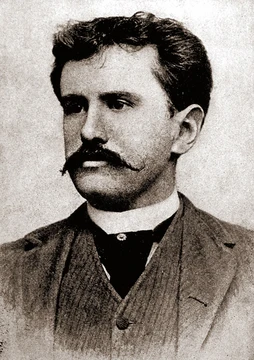
Victor Hugues
French governor who abolished then restored slavery in colonies.

He is best known for implementing the abolition of slavery in Guadeloupe during the French Revolutionary Wars, though he personally opposed abolition and later oversaw the restoration of slavery in Cayenne.
- field
- Politics, colonial administration
- nationality
- French
Lore & Background
Jean-Baptiste Victor Hugues was born into a wealthy merchant family in Marseille. He moved to Saint-Domingue in the early 1780s, where he acquired slave plantations. Forced to return to France during the Haitian Revolution, he became a prosecutor for the Committee of Public Safety in La Rochelle with Jacobin support. Despite abolishing slavery, Hugues maintained a system of forced labor and remained staunchly racist and pro-slavery. He reorganized Guadeloupe's military into racially integrated units, allowed Black officers, and purged counter-revolutionaries with a guillotine. He authorized privateers to attack British and American shipping, contributing to the Quasi-War, and attempted invasions of Saint Lucia and Anguilla with mixed results. In 1798, he was replaced as governor and returned to France. Following Napoleon's rise, he oversaw the restoration of slavery there, purchasing several slaves for himself.
Reader's Guide
Victor Hugues is a complex figure in colonial history, embodying the contradictions of the French Revolutionary era. His actions in Guadeloupe—abolishing slavery to defeat the British while personally opposing abolition and maintaining forced labor—illustrate the pragmatic and often cynical use of revolutionary ideals. His later role in restoring slavery in Cayenne aligns with Napoleon's broader reversal of emancipation. Hugues's authorization of privateers contributed to the Quasi-War between France and the United States. His legacy is preserved in historical fiction by Alejo Carpentier and James A. Michener, reflecting his dramatic and morally ambiguous career. The article notes that Hugues thought abolition was misguided, and his brutal methods in Cayenne led to economic growth but at a severe human cost.
Did You Know?
- Hugues purchased several slaves for himself after overseeing the restoration of slavery in Cayenne.
- He used a guillotine brought from France to execute alleged counter-revolutionaries in Guadeloupe.
- His authorization of privateers out of Guadeloupe contributed to the outbreak of the Quasi-War between France and the United States.
More in Literature And Writers 1-24
Spotted an error? Know more?
This is a living reference — every entry is fact-audited, and reader corrections feed straight into our audit queue. Suggest an edit · See this site's audit record